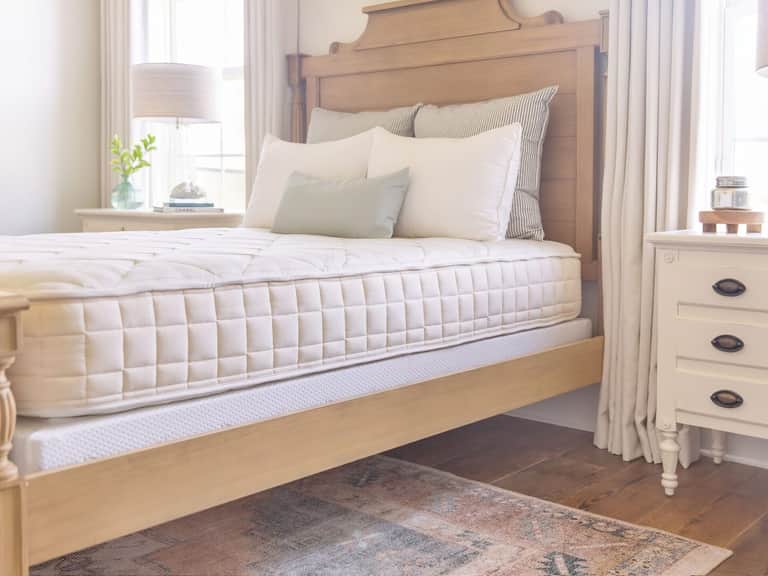
Mattress Materials & Design
Naturepedic Halcyon: A Guide to Organic Mattress Materials and Design
An organic mattress is more than a label or a list of fibers. Its comfort comes from how materials are assembled, how layers work together, and whether the design suits the person who sleeps on it. Naturepedic Halcyon offers a useful starting point for asking those questions carefully.
Published October 18, 2026
A mattress is a quiet piece of engineering. Beneath the sheet, a collection of materials manages pressure, supports the body, responds to movement, and influences the temperature of the sleep surface. Organic mattress designs add another dimension: the origin and processing of materials, the standards used to verify them, and the way those choices shape the finished bed.
The Naturepedic Halcyon line is a useful case for learning how to read an organic mattress description. The aim is not to treat a name as a guarantee that one mattress will suit every sleeper. It is to look beyond broad promises and examine construction, comfort choices, certifications, care instructions, and practical fit. Specific configurations and product details can change, so current manufacturer documentation should always be checked before making a decision.
That distinction matters. “Organic” speaks primarily to materials and standards; it does not automatically describe firmness, durability, temperature, or whether a mattress will feel comfortable to a particular person. Those qualities depend on the complete design—and on the sleeper.
Start with the construction, not the label
Mattress construction is a sequence of decisions. A maker chooses a support core, comfort layers, fabrics, quilting, barriers, and the method used to join those components. Each part has a role, and the interaction among them determines much of the mattress’s feel. A material name on its own tells only part of the story.
When evaluating a Naturepedic Halcyon model, begin by finding a current materials breakdown for the specific configuration under consideration. Look for the layers in order, from the sleeping surface down to the support core. Note whether the design uses latex, coils, cotton, wool, or other materials, and whether the composition differs by model or comfort option. Do not assume that every mattress in a product line has the same internal structure.
Then ask what each layer is intended to do. A comfort layer generally influences the initial feel and pressure relief. A support core provides the deeper structure that helps carry body weight. Quilting and surface fabrics affect the hand-feel, while a fire barrier is part of the mattress’s safety design. These functions overlap, but separating them makes product descriptions easier to interpret.
- Layer order: Which materials are closest to the body, and which form the deeper support?
- Material composition: Are components described precisely, or only with broad terms such as “natural”?
- Assembly: Does the manufacturer explain how the layers are held together and whether adhesives are used?
- Configuration: Are material choices or comfort options different across sizes and models?
- Documentation: Can claims be checked against current certification records or product specifications?
These questions are useful for any mattress, not only an organic one. They replace a vague impression of “natural materials” with a more concrete understanding of what is inside the bed.
What organic materials can—and cannot—tell you
Organic fibers may be used in a mattress cover, batting, quilting, or other components. The word “organic,” however, is meaningful only in relation to a defined standard and the specific material or product component covered by that standard. Certification is not a shortcut for understanding comfort, and one certified component does not necessarily mean every component has identical credentials.
When reading claims about a Halcyon mattress, identify exactly what is certified and by whom. Check whether a standard applies to a fiber, a finished textile, or a broader product. Look for a certificate or a clear explanation of scope rather than relying only on a prominent badge or general marketing language. Standards can differ in what they assess, and their requirements may be updated over time.
Material origin and material performance are also separate questions. Cotton, wool, latex, and other inputs have different structures and uses. Breathability, resilience, cushioning, and moisture management depend on the material’s form, density, processing, and position in the mattress. The same fiber can behave differently when used as a thin cover layer than when used as a substantial batting layer.
Likewise, “organic” does not mean chemical-free. Every physical material is made of chemicals; the useful consumer question is which substances are present, what standards apply, and how the manufacturer addresses safety and emissions. Ask for specific, verifiable information rather than relying on absolute language.
Comfort is a system, not a single number
Firmness labels are convenient, but they are not universal measurements. One brand’s medium may feel different from another brand’s medium. Even within the same mattress, body weight, shape, sleep position, and personal sensitivity can change how firmness is experienced. A mattress description is a starting point; it cannot reproduce the sensation of lying on the bed.
Think of comfort in two related parts. The surface response is the first impression: how readily the upper layers yield, cushion, or contour. Support is the deeper sensation of the body being held in a stable position. A bed can feel plush at first touch yet remain supportive underneath, or feel firm at the surface while still allowing some give. Both elements matter.
Customization, when offered, can help narrow the gap between a general design and an individual preference. But customization should be understood precisely. It might refer to a choice among firmness options, a rearrangement of layers, or a configuration that can be changed later. These are different things. Before placing an order, establish what can be selected, what can be changed after delivery, whether changes incur costs, and how the process works.
For couples, ask whether each side can be configured independently and which sizes support that feature. A split comfort arrangement may address different preferences, but it can also affect the feel at the center of the bed or require specific bedding. The manufacturer’s current instructions are essential; do not infer that a customization option exists merely because another model in a line has one.
Match the design to sleeping position and body feel
Sleeping position offers a practical way to organize a mattress comparison, though it is not a rigid rule. Side sleepers often pay close attention to pressure around the shoulders and hips. Back sleepers may focus on whether the middle of the body feels supported without an uncomfortable hard surface. Stomach sleepers commonly consider whether the bed allows the torso to sink more than they prefer. A person who changes position during the night needs to consider several of these experiences at once.
Body weight and proportions also influence how deeply the sleeper engages with the comfort layers. Two people lying on the same mattress can experience different firmness because they load the surface differently. A mattress that feels supportive to one person may feel too yielding or too rigid to another. This is why a model name or a firmness category alone is not enough to predict fit.
When testing a mattress in person, spend time in the positions you actually use. Notice whether pressure builds, whether the spine feels comfortably aligned, and whether turning over requires effort. At home, a sleep trial may offer a longer assessment, but the terms should be reviewed in advance: minimum use periods, return fees, exchange rules, and the condition required for a return all matter.
Comfort is personal, but the evaluation can still be methodical. Keep notes on the position tested, the amount of time spent on the bed, and what felt supportive or distracting. If there is persistent pain or a health concern, mattress selection is not a substitute for advice from a qualified health professional.
Temperature, movement, and everyday use
Sleep temperature is shaped by more than the mattress. Room conditions, clothing, sheets, bedding, and individual physiology all contribute. Mattress materials and construction can affect airflow and heat retention, but no material guarantees that every sleeper will stay cool. Ask how the overall design manages ventilation, and consider the cover and comfort layers along with the core.
Movement is another practical consideration. The way a mattress responds when one person shifts can influence a partner’s experience. Different support systems and comfort layers transmit movement differently, but an overall impression should be tested where possible. If sharing a bed, both sleepers should assess the mattress rather than relying on one person’s initial reaction.
Edges, height, and compatibility with the bed base deserve attention too. Check the manufacturer’s requirements for foundations, slats, adjustable bases, and other support systems. A mattress placed on an unsuitable base may not perform as intended and could affect warranty coverage. Confirm dimensions against the frame, especially when replacing a mattress in a room with tight clearances.
Care, protection, and longevity
A well-chosen mattress still needs suitable care. Begin with the manufacturer’s cleaning instructions. Some covers are removable; others are not intended to be removed or laundered. Never assume a zippered cover is machine washable. Spot-cleaning guidance, drying requirements, and restrictions on cleaning products should be followed closely.
A mattress protector can help limit stains, perspiration, and everyday wear, but its construction may change the feel of the sleep surface. Waterproof layers, thick quilting, and tightly fitted fabrics can affect breathability or surface response. If protection is a priority, compare protector materials and fit rather than treating every cover as interchangeable.
Rotation instructions vary by design. Some mattresses are made to be used in one orientation and should not be flipped; others may have specific rotation guidance. Follow the manual rather than applying a universal schedule. Proper support from the foundation and attention to weight limits or use restrictions, where specified, are similarly important.
Warranty length can be useful information, but it is not a direct forecast of how long a mattress will feel comfortable. Read the terms for exclusions, required support, visible impressions, and the process for making a claim. A warranty addresses defined defects under stated conditions; it does not guarantee that a sleeper’s preferences will remain unchanged.
Use comparisons to sharpen the questions
Comparing products can make specifications clearer, as long as the comparison is like-for-like. For example, the Naturepedic Chorus Organic Cotton Mattress is another organic mattress in the Naturepedic range, with a published description that identifies cotton, wool, PLA fiber, and individually nested springs. Its stated construction and comfort profile are specific to the Chorus; those details should not be transferred to Halcyon.
That distinction is useful. A brand may offer several designs for different preferences, and product-line names do not establish that they share the same construction or feel. Use published specifications to identify differences, then verify the details for the exact model and configuration under consideration. If the materials list is unclear, ask the manufacturer or retailer to explain it in writing.
A practical checklist before deciding
Before comparing prices or settling on a configuration, gather the information that affects daily use. The goal is not to decode every technical detail. It is to be able to explain what the mattress is made of, how it is expected to feel, and what happens if the fit is wrong.
- Confirm the current layer-by-layer materials list for the precise model and size.
- Check what organic or other certifications cover, and review current documentation.
- Clarify the available firmness or customization choices and their limits.
- Test the mattress in your usual sleeping positions, if possible.
- Review trial, exchange, return, delivery, and setup terms before purchase.
- Verify compatible foundations, frame dimensions, and adjustable-base requirements.
- Read care instructions and confirm whether the cover can be removed or washed.
- Understand warranty exclusions and any conditions for maintaining coverage.
The larger point: informed choice over perfect promises
Organic mattress shopping can invite broad expectations: cleaner materials, better sleep, greater durability, or a universally comfortable feel. Those outcomes are not interchangeable, and none should be assumed from a label alone. A careful comparison separates material credentials from comfort, construction from certification, and marketing claims from documented product facts.
Naturepedic Halcyon is best approached as a design to investigate, not a conclusion in itself. Examine the current specifications. Ask how each layer contributes to the feel. Determine what customization really means, and test whether the resulting surface works for your body and sleeping habits. The right mattress is the one whose materials, support, care requirements, and comfort align with the needs of the people who will use it.
That approach is less dramatic than a promise of perfect sleep. It is also more useful. A mattress is an everyday object, experienced one night at a time. Reading its construction with care turns a crowded field of claims into a set of clear, practical decisions.
Frequently asked questions
Does an organic mattress automatically feel different?
Not necessarily. Feel depends on the complete construction, including material type, layer thickness, firmness, and support design. Organic credentials describe standards for materials or production, not a single comfort sensation.
Can a mattress be customized for different sleepers?
Some designs offer comfort choices, but options vary by model. Confirm exactly what can be selected or adjusted, whether each side can differ, and what exchange conditions apply.
Should an organic mattress cover be washed?
Only if the manufacturer’s instructions explicitly permit it. A removable cover is not necessarily machine washable. Follow the care label and product manual to avoid damage.
How should I compare Halcyon with another mattress?
Compare current materials lists, layer order, firmness options, support systems, certifications, trial policies, care requirements, and compatible foundations. Avoid assuming that specifications for one model apply to another.