Bedding Basics
Mattress Toppers vs. Pads: Choosing the Right Comfort Layer
Both sit between you and the mattress. The difference is what they are meant to do: a topper changes the feel of the bed, while a pad usually offers a lighter layer of cushioning and everyday protection. Knowing how each is built—and how it fits into your bedding setup—can make a small purchase feel like a consequential decision.
Published November 3, 2026
A mattress can be structurally sound and still feel too firm, too warm, or simply less comfortable than it once did. Before replacing it, many sleepers look to the layers placed on top. The terminology, however, can blur: “mattress topper” and “mattress pad” are sometimes used interchangeably in listings, even though the products often differ in thickness, materials, and purpose.
The distinction is practical rather than absolute. A topper is generally a substantial comfort layer intended to alter the sleep surface. A pad is usually thinner and designed to add modest softness, help shield the mattress from routine wear, or make the bed easier to maintain. Some pads are plush; some toppers are relatively slim. Labels alone cannot tell the whole story, so construction and care instructions matter.
The right choice begins with a simple question: What do you want to change? If the mattress feels uncomfortably firm, added cushioning may help. If you are mainly trying to protect the surface from perspiration, spills, or daily friction, a pad or protector may be the more direct answer. A comfort layer can refresh the experience of a bed, but it cannot repair a sagging support core or correct every source of discomfort.
The essential difference
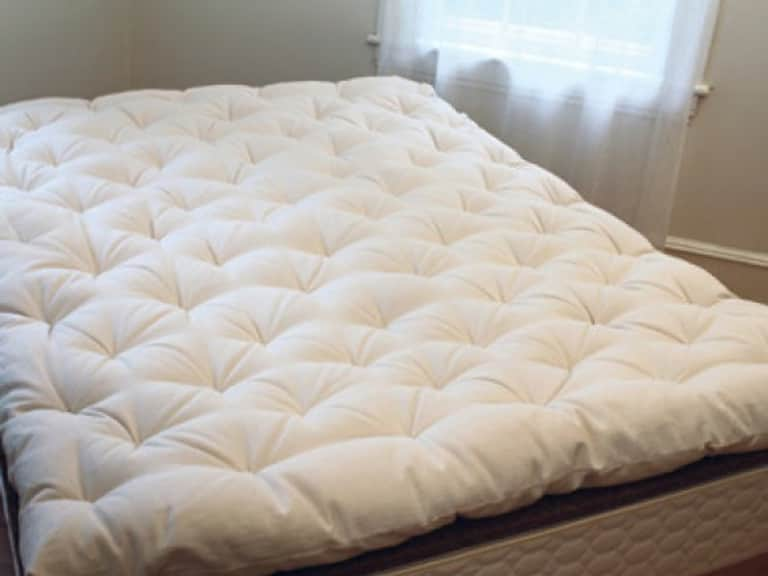
Think of a topper as an adjustment to the mattress’s feel and a pad as a lighter, more protective bedding layer. A topper may be several inches thick and made from materials such as memory foam, latex, wool, or fiber fill. Its depth and response can affect pressure relief, contouring, and how closely the body settles into the surface.
A mattress pad is typically thinner, often quilted, and made from cotton, polyester, or a blend. It can add a little loft and softness while creating a buffer between the mattress and fitted sheet. Depending on its design, a pad may also help protect against ordinary wear. It should not be assumed to be waterproof: protection against liquid depends on the specific materials and construction, and a pad described as washable is not necessarily a waterproof protector.
There is no universal thickness cutoff that separates one category from the other. Manufacturers use the terms differently, and product designs overlap. When shopping or comparing what you already own, look beyond the name. Check the layer’s height, fill, attachment method, stated purpose, care instructions, and whether it includes a barrier against moisture.
| Feature | Mattress topper | Mattress pad |
|---|---|---|
| Main role | Changes the feel of the sleep surface | Adds light cushioning and may help protect the mattress |
| Typical profile | Often thicker and more substantial | Usually thinner, frequently quilted |
| Common materials | Foam, latex, wool, fiber fill, or layered combinations | Cotton, polyester, blends, and quilted fills |
| Fit considerations | May need a fitted sheet with extra depth or a separate securing system | Often uses a fitted skirt or elastic anchor bands |
| Care | Varies widely; some are spot-clean only | Some are machine washable, but labels determine the method |
When a topper makes sense
A topper is worth considering when the mattress remains supportive but its surface feels wrong. A firm mattress, for example, may feel harsh at the shoulders or hips for a side sleeper. A suitable comfort layer can add cushioning at those contact points. Someone who prefers a more buoyant surface may instead look at materials that respond differently from slow-conforming foam.
The material affects the experience. Memory foam tends to contour closely and can reduce the sensation of pressure for some sleepers, though it may retain warmth depending on its formulation and the surrounding bedding. Latex generally has a more responsive, buoyant feel. Wool and fiber fills can provide softer loft and a different balance of breathability and moisture management. These are broad tendencies, not guarantees: density, construction, cover fabric, and personal preference all play a part.
A topper can also be useful when two people share a bed but have different comfort preferences, provided the design and mattress arrangement accommodate that difference. A single topper changes the surface across the full bed; split arrangements may allow separate adjustments, but they can create a seam or require specific bedding. Measure before assuming that a particular configuration will fit.
There are limits. A topper does not restore worn-out springs, eliminate a deep body impression, or make an unstable foundation sound. If a mattress has pronounced sagging, uneven support, or damage, adding a thick layer may disguise the problem temporarily without resolving it. It may also feel uneven if the underlying surface is uneven.
When a pad is the better choice
A pad is often the more sensible option when the mattress already feels comfortable and the goal is to add a modest layer of softness or create a washable buffer beneath the sheet. It can make the surface feel a little more cushioned without substantially changing the mattress’s underlying character.
Construction can make a noticeable difference. A quilted cotton pad may offer a breathable, lightly cushioned feel, while a thicker fill or terry surface can feel loftier and more textured. Elasticized skirts and anchor bands help keep some designs in place. Others may shift more easily, particularly on slippery mattress covers or when the pad is not sized correctly.
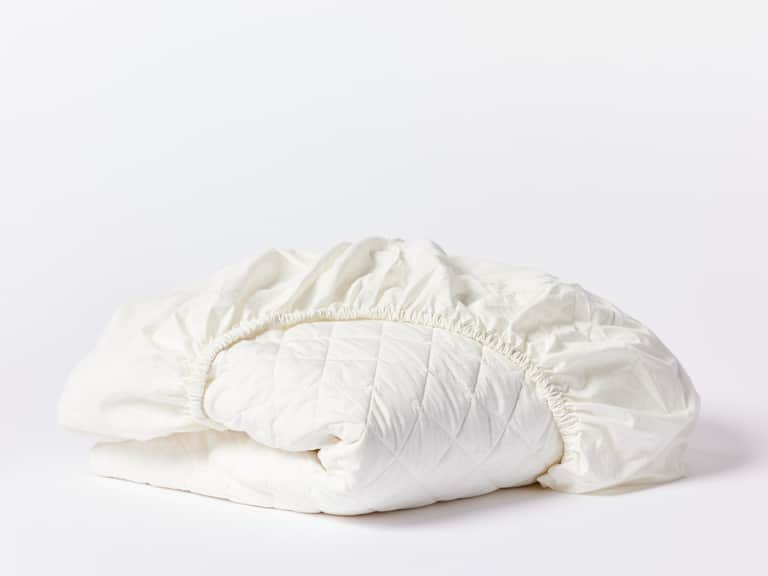
For example, the Organic Cotton Mattress Pad is described as a 100% organic cotton design with two-inch quilted squares, 15-inch deep pockets, and a machine-washable construction. Details like these illustrate the practical questions to ask about any pad: what it is made from, how it is secured, how much loft it adds, and whether its pockets fit the depth of your mattress.
If spills or accidents are a concern, verify that a product is specifically designed to resist liquid. A regular quilted pad may absorb moisture rather than block it. A dedicated waterproof protector is built for that job, though its surface can feel different from a conventional pad. Reading the product’s stated protection level is more reliable than inferring it from the word “pad.”
Fit: the detail that can undo a good choice
A comfort layer only works as intended if it stays in place and allows the bedding to fit. Before buying, measure the mattress’s length, width, and depth. Include any existing topper or pad when calculating the total height that a fitted sheet must cover. A sheet that is too shallow can pull loose at the corners; one that is excessively deep may bunch.
Check the attachment style as well. A fitted skirt wraps around the mattress, but its stated pocket depth may not account for every combination of mattress and added layers. Corner straps or anchor bands can secure a topper without enclosing the full mattress. The best approach depends on the bed’s depth, the topper’s thickness, and how much movement occurs during sleep.
A layered bed can become crowded quickly. A mattress protector, topper, pad, fitted sheet, and additional blankets all contribute to height and can affect how securely the sheet holds. If a fitted sheet is already close to its limit, adding a thick topper may make the whole setup less stable. Consider whether every layer is serving a distinct purpose.
Heat, moisture, and material choices
Sleep temperature is shaped by more than the topper or pad alone. Mattress construction, room temperature, pajamas, sheets, blankets, and individual physiology all contribute. Still, a new layer can change airflow and how heat or moisture moves at the surface.
Dense foam may feel close-contouring and can limit airflow compared with a thinner, more open construction. Wool is often chosen for its ability to help manage temperature and moisture, while cotton is valued for a familiar, breathable feel. Synthetic fibers vary by weave and fill. These material descriptions can guide comparison, but they should not be treated as promises that one product will keep every sleeper cool or dry.
If you tend to sleep warm, pay attention to the full product description rather than relying on phrases such as “cooling” or “breathable.” Look for details about the fill, cover, and construction. A thick comfort layer may change the feel of the bed more substantially, but it can also affect the sleep climate. If warmth is already a concern, a lighter pad or a different sheet weave may be a less dramatic first adjustment.
Care and durability
The care label deserves a place in the decision. Pads are often easier to wash than thick toppers, but this is not universal. Some pads can be machine washed and tumble dried on specified settings; others require gentle treatment. A foam topper may need spot cleaning and thorough air drying rather than a washing machine. Wool, silk, and specialty constructions can have their own restrictions.
Regular laundering can help keep bedding fresh, but washing too aggressively or using the wrong temperature may damage fibers, shrink fabric, distort quilting, or affect elastic. Follow the manufacturer’s directions and make sure a layer is fully dry before returning it to the bed. Damp bedding can develop odor and may encourage unwanted moisture problems.
A pad can serve as a replaceable layer that takes some everyday friction in place of the mattress cover. A topper may also help preserve the surface, but its primary purpose is often comfort rather than protection. Neither automatically replaces a mattress protector when the priority is a reliable barrier against liquid, dust, or allergens. Choose each layer according to the job it is designed to do.
A practical way to choose
Rather than starting with material trends or product names, identify the problem you want to solve. Then match the layer to that problem. A short checklist can narrow the options:
- The mattress feels too firm, but still supports you evenly: consider a topper that adds the kind of cushioning you prefer.
- The mattress is comfortable, but you want a little more softness: a lightly cushioned pad may be enough.
- You want a barrier against spills or bodily fluids: look for a product explicitly described as waterproof or liquid-resistant.
- The bed feels hot: examine materials and the whole bedding system before adding a thick layer.
- The mattress sags or feels uneven: assess the mattress and foundation; a comfort layer is unlikely to correct structural wear.
- You need easy laundering: confirm the specific wash and drying instructions before purchase.
- Your fitted sheet already struggles to stay on: measure total bed depth and account for the added layer.
Whenever possible, test the existing bed before committing to another layer. Remove unnecessary bedding, inspect the mattress and foundation, and note when discomfort occurs. Does the surface feel hard only at the shoulders? Does it feel warmer after adding a particular blanket? Does the mattress dip in one area? A clear diagnosis can prevent buying a pad when you need a topper—or expecting either one to solve a problem it cannot address.
Common misconceptions
“A topper and a pad are the same thing.”
Some products overlap, and terminology is not perfectly standardized. But the broad distinction remains useful: toppers generally make a more substantial change to the surface feel, while pads generally provide lighter cushioning and may add protection. Compare specifications rather than relying on category labels alone.
“A thicker layer always means more comfort.”
More thickness can change the bed more dramatically, but comfort is personal and depends on support as well as softness. An overly plush layer may feel unstable to someone who prefers a firmer surface. Thickness can also affect sheet fit and temperature.
“Any mattress pad protects against liquid.”
Many conventional pads are designed for cushioning and routine wear, not waterproofing. Check the product details for a stated liquid barrier. When protection is important, a purpose-built protector may be a better match.
“A topper can fix an old mattress.”
A topper may improve surface comfort if the mattress is otherwise in reasonable condition. It cannot restore lost structural support or correct significant sagging. If the underlying bed is failing, a new layer may be a temporary compromise rather than a lasting solution.
The bottom line
The choice between mattress toppers and pads is less about which product is universally superior than about the role each layer plays. A topper is typically the more substantial route when you want to alter cushioning or the feel of the bed. A pad is often the simpler choice for light softness and a washable layer over a mattress that already works for you.
Before choosing, inspect the mattress, define the problem, compare materials and construction, check the fit, and read the care instructions. Make sure a product’s protection claims match your needs, and remember that a comfort layer cannot repair a worn-out support system. The best bedding setup is not the one with the most layers. It is the one in which every layer has a clear purpose.